I almost blamed the kit.
Quick Diagnosis: What Happens When You Press START?
| Symptom | What to check first |
|---|---|
| No response | Battery, fused constant power, ground, connectors |
| ACC works, no crank | Brake input signal and polarity, starter control, vehicle safety interlocks |
| Cranks, won't start | Required ignition power during crank, immobilizer authorization, vehicle diagnostics |
| Starts then stalls | Factory security status and ignition-power retention |
| Remote start fails | Remote-start prerequisites, safety inputs and compatible vehicle interface |
Diagnostic overview only. Never defeat the vehicle's original starter, hood, brake or transmission safety systems.
Honestly, I think most people do.
You spend half a day lying upside down under the dashboard, reconnect the battery, climb into the driver's seat, press the brake, hit the new start button…
The dashboard lights up. The fuel pump primes. The starter turns for a second. Then… Nothing.
Your first thought usually isn't, "I probably missed a connection." It's, "Great… I bought a bad kit."
I had exactly the same reaction.
Five minutes later I realized I was blaming the wrong thing.
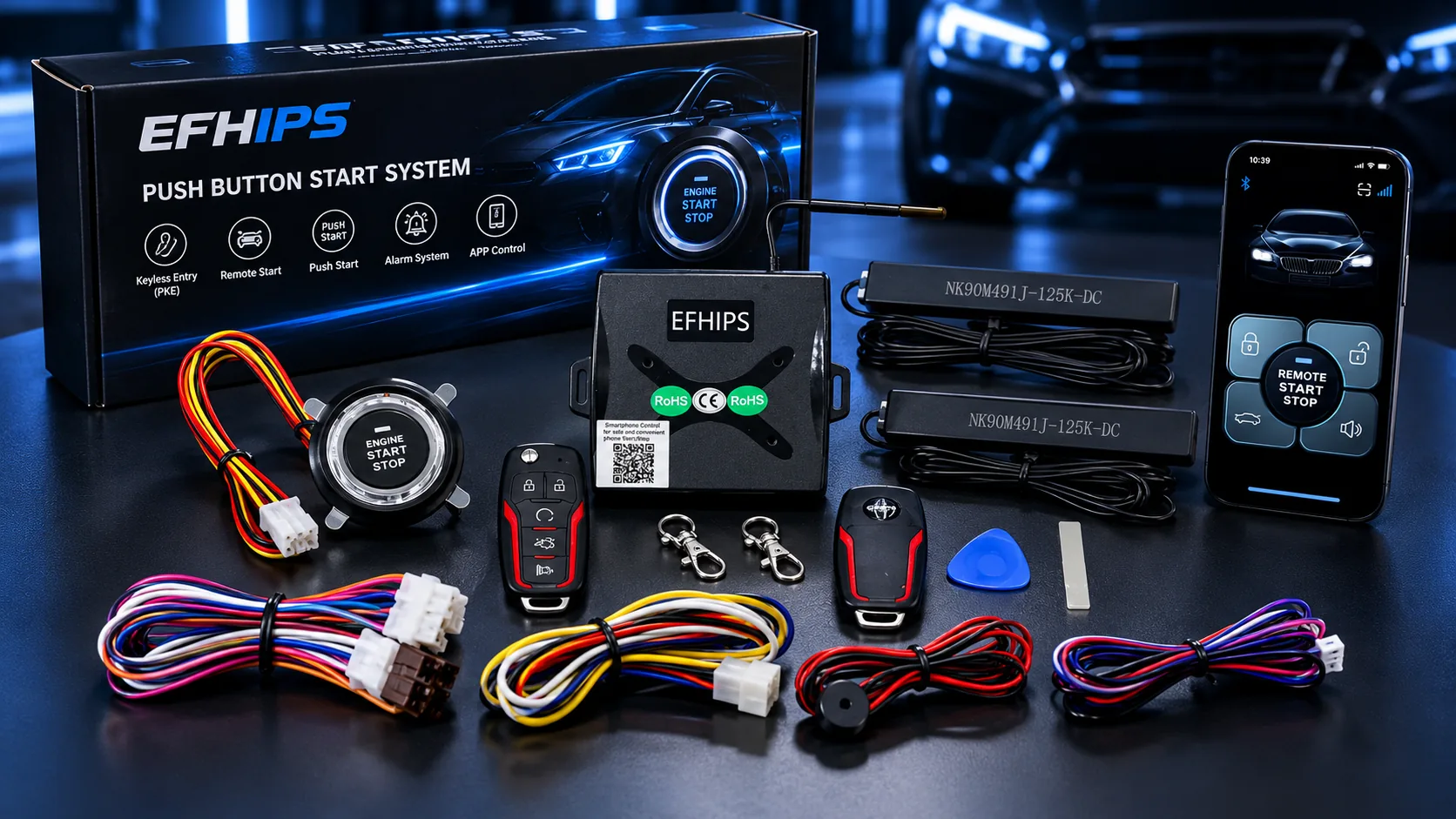
EFHIPS 9007 Kit Components: Identify the Parts Before Troubleshooting
Before checking your push button start installation, identify the main control module, start/stop button, remote controls, antennas and wiring harnesses using the labeled EFHIPS 9007 component reference below. Knowing which part you are testing makes fault diagnosis clearer.
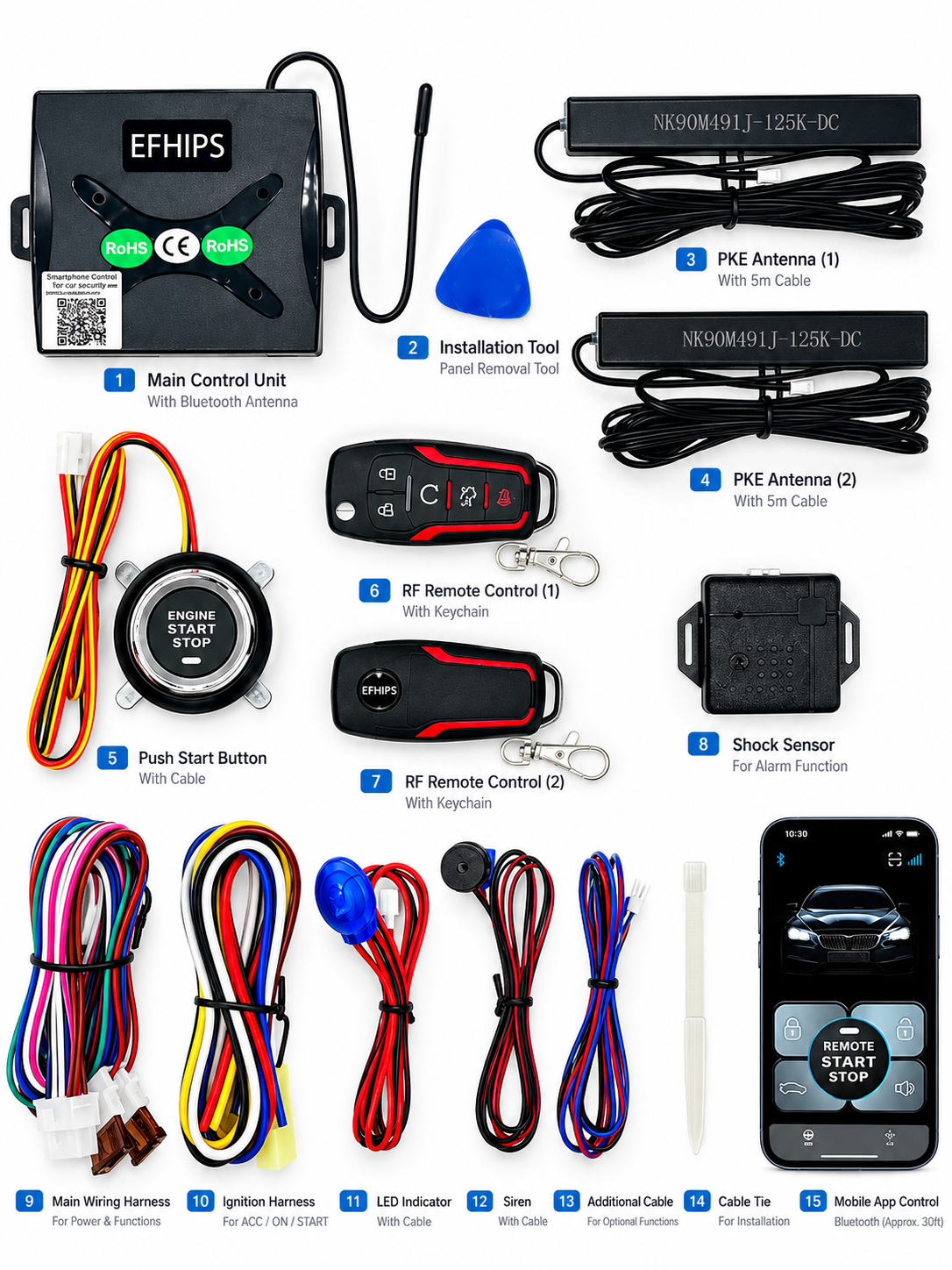
Once you have identified the components, follow the symptom-based checks below. Do not use a component identification image as a vehicle-specific wiring diagram.
Slow Down Before You Start Pulling Everything Apart
The first mistake people make during troubleshooting is creating a second problem.
When something doesn't work immediately, it's tempting to disconnect every connector and start over. Don't. Leave everything exactly where it is.
Instead, ask one question at a time.
- Did the button light up?
- Did the dashboard enter accessory mode?
- Did the ignition turn on?
- Did the starter motor crank?
- Did the engine try to fire?
Every answer removes one possible cause. Electrical troubleshooting is much easier when you eliminate possibilities instead of guessing.
If Nothing Happens at All
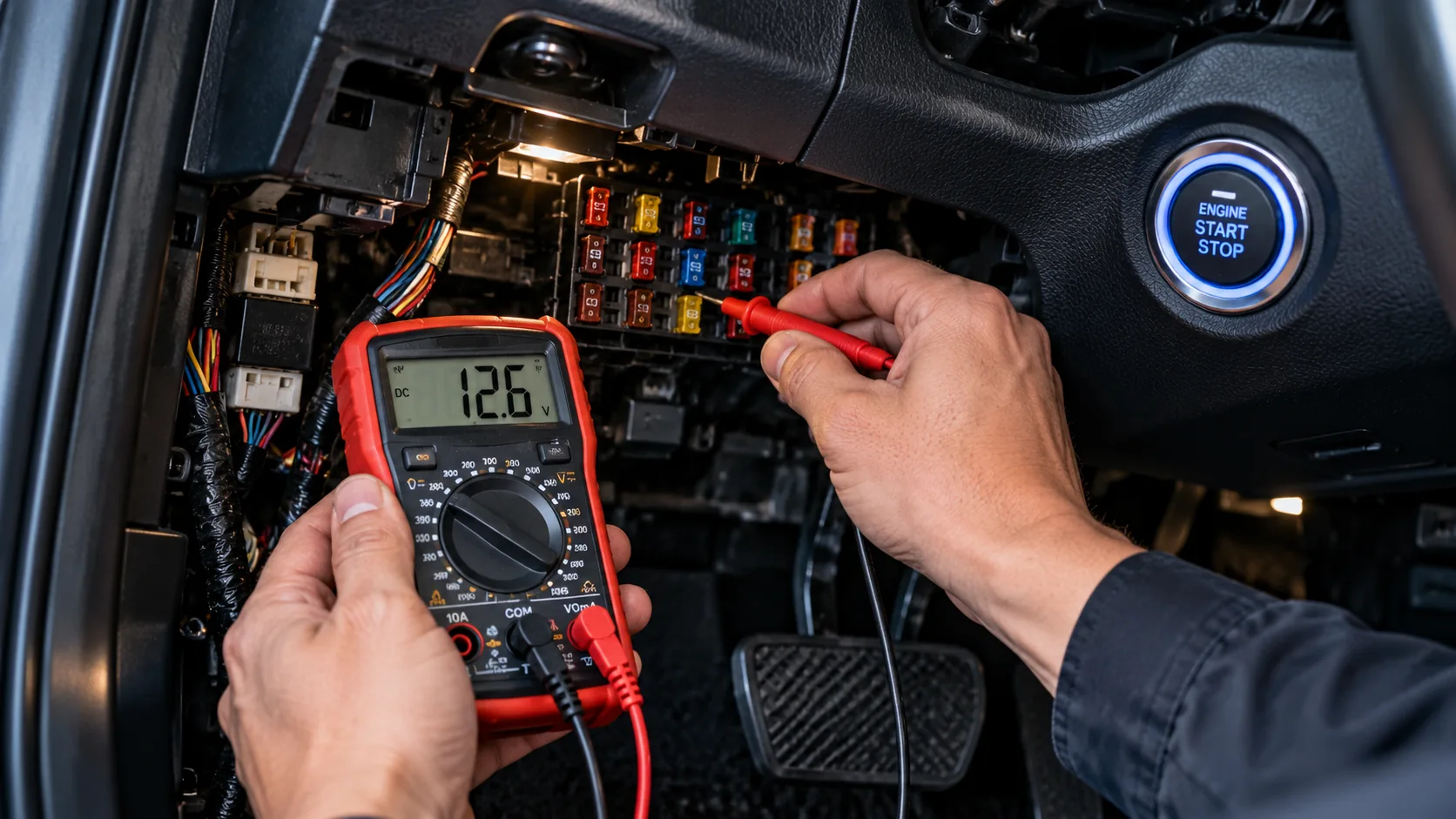
If pressing the push button does absolutely nothing, don't immediately assume the control module has failed.
Start with the basics.
- Is the battery fully connected?
- Did you reconnect the negative terminal?
- Does the system have constant 12V power?
- Is the ground attached to clean bare metal?
If the Dashboard Lights Up but the Starter Doesn't
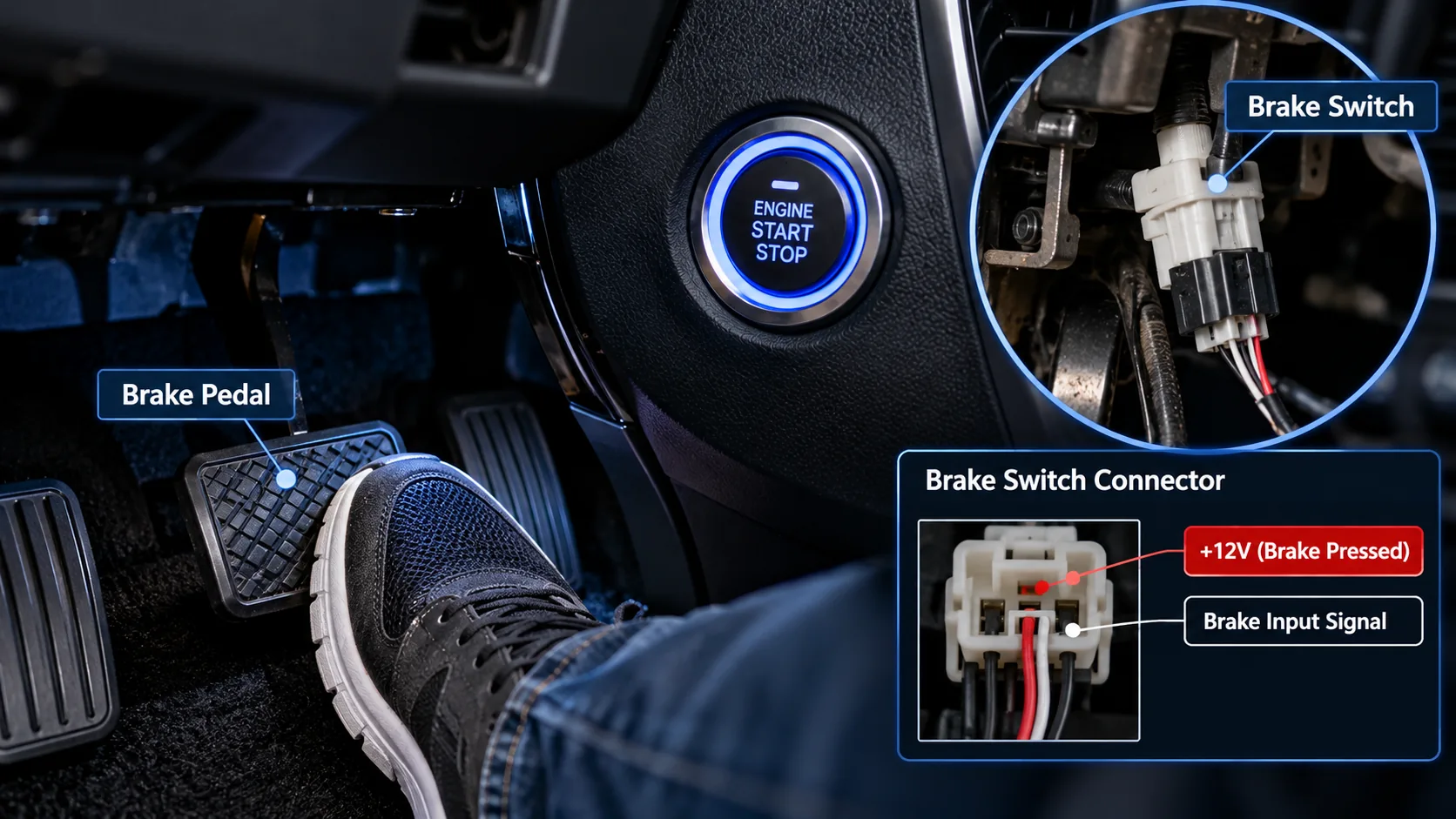
This situation usually narrows things down considerably. The system is obviously receiving power. Accessory mode works. The button responds.
Now the question becomes: Why isn't the starter receiving the signal?
Several common causes include:
- Brake input not detected
- Incorrect starter wire identification
- Loose starter output connection
- Poor ground connection
- Safety input not satisfied
Notice something? None of those automatically mean the push button start kit is defective. Most are installation-related.
The Engine Cranks… Then Immediately Dies
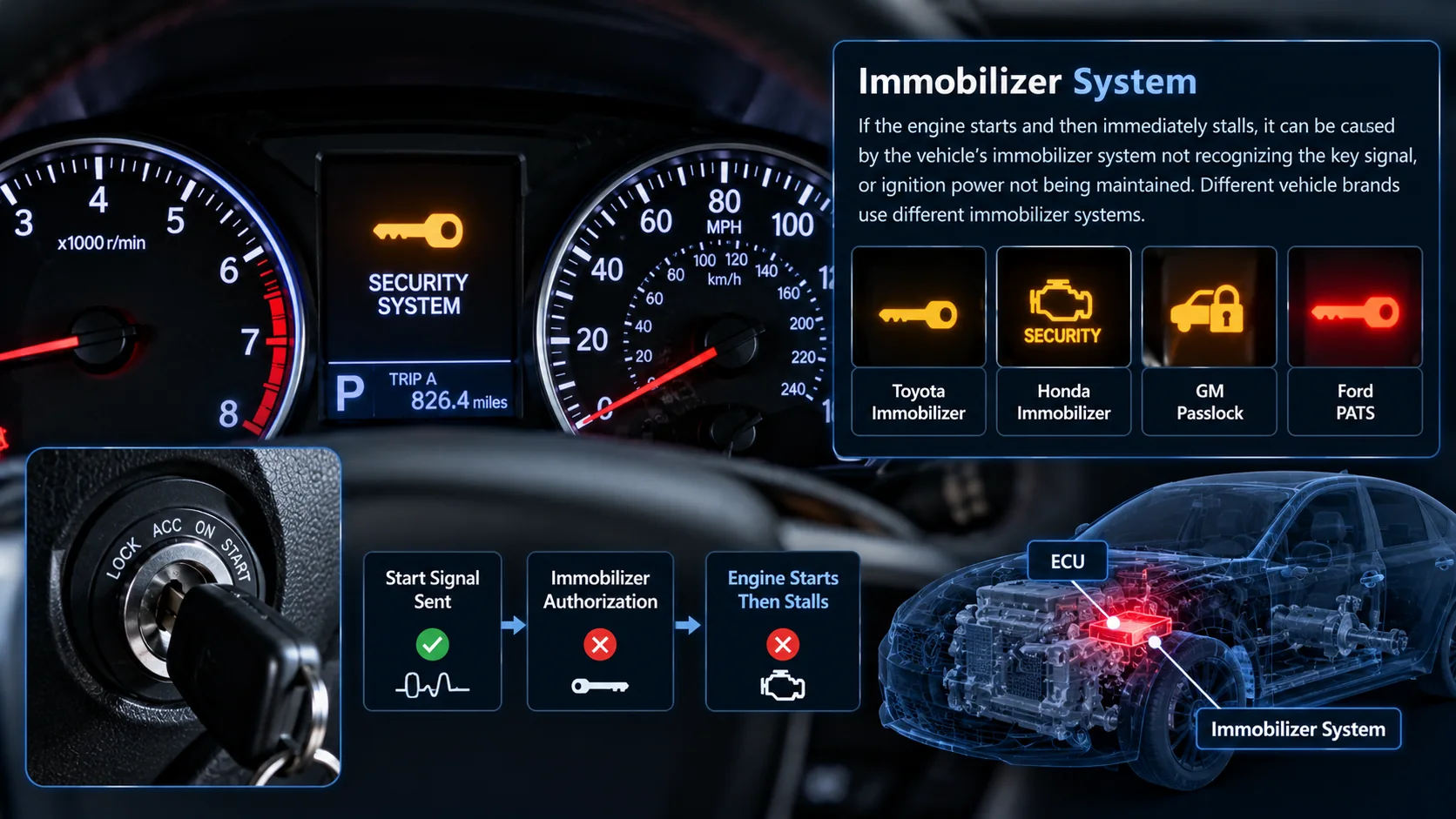
This is probably the most misunderstood symptom.
People often describe it like this:
- "It starts for one second."
- "It almost runs."
- "It shuts off immediately."
If that sounds familiar, stop checking ignition wires for a moment. Think about the factory security system.
Many vehicles equipped with:
- Ford PATS
- GM Passlock
- Chrysler SKIM
will crank normally but refuse to continue running if the immobilizer isn't satisfied. The starter isn't the problem. The vehicle simply doesn't recognize an authorized start.
Wire Colors Can Fool You
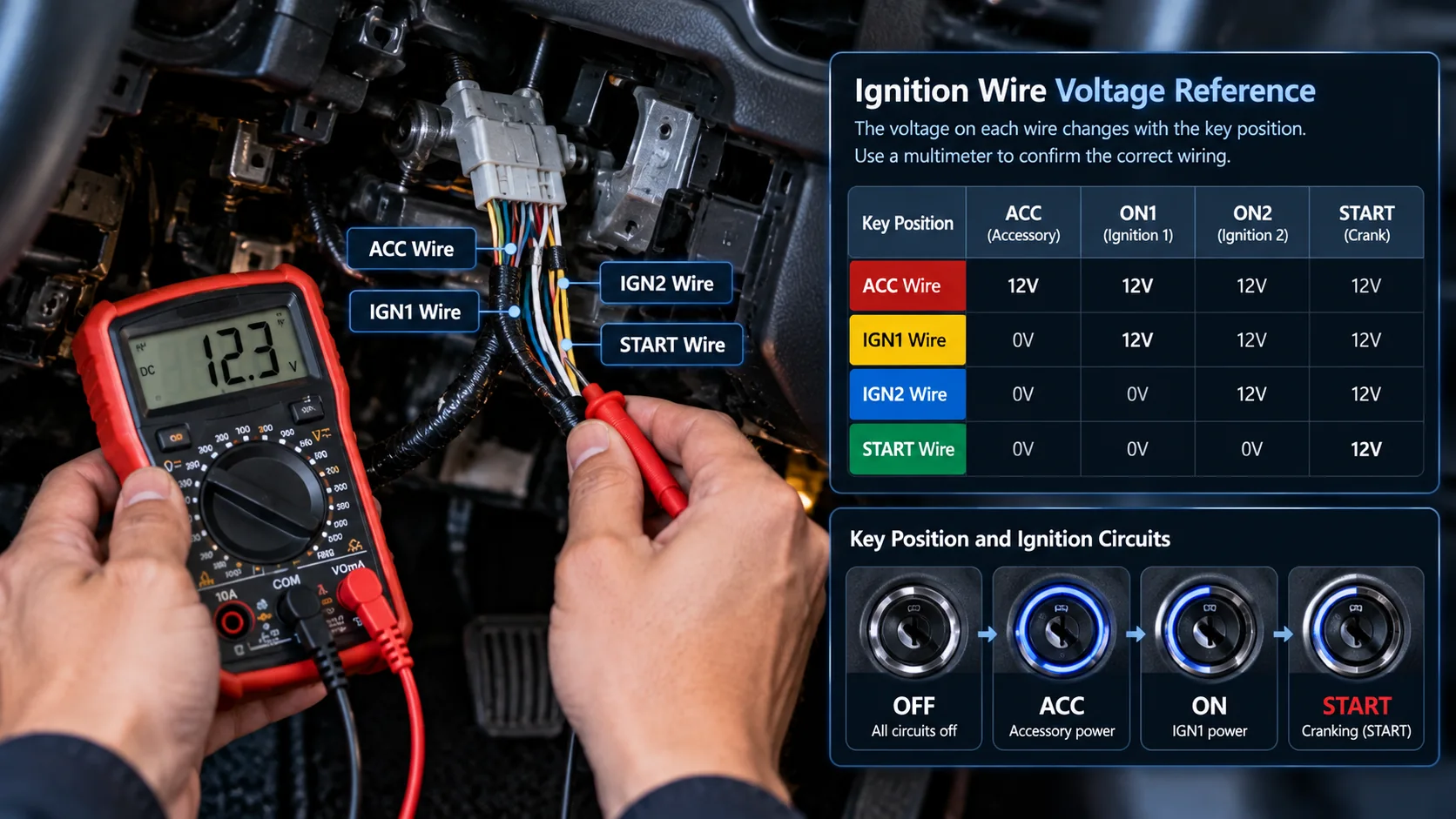
I learned this lesson the hard way.
The wiring guide showed a red ignition wire. Mine looked orange. After twenty minutes with the multimeter, I realized neither description really mattered. Voltage mattered. Testing mattered.
Older vehicles often have faded insulation, aftermarket repairs, or replacement harnesses. Never trust color alone. Always verify the circuit. A digital multimeter removes almost all of the guesswork.
Don't Ignore the Ground
Ground connections don't get much attention. They should.
A poor ground can create symptoms that seem completely unrelated:
- Intermittent operation
- Random resets
- Starter problems
- Button illumination without engine start
Test One Function at a Time
The easiest way to become overwhelmed is testing everything simultaneously.
Keep it simple.
- Can the system enter accessory mode? Good.
- Can it enter ignition mode? Good.
- Does the brake input register correctly? Good.
- Can the starter operate? Good.
- Can the engine continue running?
Every successful test removes another possible fault. Trying to diagnose five systems at once usually creates confusion.
Before You Put the Dashboard Back Together
This is where patience pays off.
Don't rush to reinstall trim panels simply because the engine started once. Test repeatedly.
- Start the vehicle several times.
- Shut it down.
- Try remote start.
- Try remote shutdown.
- Lock and unlock the doors.
- Open and close the driver's door.
- Wait five minutes.
- Repeat the tests.
Electrical problems often reveal themselves through repetition. One successful start doesn't necessarily mean the installation is complete.
When Should You Ask for Help?
There's no prize for solving every problem alone.
If you've verified power, ground, starter output, brake input, and immobilizer compatibility—and something still doesn't make sense—stop guessing.
Take clear photos. Label the connectors. Write down exactly what the vehicle does:
- Does the button illuminate?
- Does accessory mode work?
- Does the starter crank?
- Does the engine fire briefly?
- Are there any warning lights?
Those details make troubleshooting much faster than simply saying, "It doesn't work."
📧 Need help with your installation?
The EFHIPS Technical Support team has helped hundreds of DIY installers get their push button start systems running correctly. Contact us with photos and voltage measurements.
EFHIPS 9007 Installation Checks: Brake Input, IGN1 / IGN2 and Factory Security
For the EFHIPS 9007 push button start system, identify the exact symptom before changing wiring. If ACC and ignition functions work but the starter does not engage, confirm the brake-input signal and polarity against the official EFHIPS installation guide. Some vehicles may need a properly designed signal interface; do not connect opposite-polarity circuits directly.
For a crank-no-start condition, verify the required ignition feeds during START. ACC, IGN1, IGN2 and START are different functions, and vehicle wire colors and voltage behavior vary. The illustration above is conceptual and must not be used as a universal wiring diagram.
Factory immobilizer systems, including certain Ford PATS and GM Passlock configurations, may require a separate compatible bypass/interface. Do not assume the EFHIPS 9007 automatically includes factory immobilizer bypass capability. Confirm vehicle-specific compatibility and keep original safety and security protections functional.
For more help, consult the EFHIPS FAQ or contact EFHIPS support. See EFHIPS 9007 product details for features and purchasing information.
Frequently Asked Questions
Most commonly, this is caused by the factory immobilizer. If your vehicle uses PATS, Passlock, or SKIM, the engine may crank normally but shut off immediately if the security system isn't satisfied. Check your immobilizer bypass solution.
Check battery voltage, ground connection, and constant 12V power. The most common cause is a loose ground or terminal connection, not a defective push button start kit.
A factory immobilizer issue is one possible cause, but ignition power and engine-management faults should also be checked. The vehicle's security system is preventing the engine from continuing to run. Verify your immobilizer bypass is correctly installed.
The brake input signal is missing or incorrect. The system needs to detect the brake signal before it will engage the starter.
Probably not. In our experience, most reported "failures" are actually wiring issues, ground problems, or immobilizer-related. A quality push button start system is rarely the cause.
Final Thoughts
Every installation reaches a point where something doesn't go exactly as planned. That's normal.
The difference between a frustrating afternoon and a successful installation usually isn't experience. It's the willingness to slow down, verify one thing at a time, and resist the urge to assume the worst.
Most push button start systems don't fail. Most installation problems have surprisingly simple causes. And more often than not, the solution is already sitting under the dashboard—you just haven't spotted it yet.
Need a Push Button Start Kit That Actually Works?
The EFHIPS push-to-start system is designed for reliable DIY installation with proper immobilizer bypass support.
or contact our team for compatibility advice