EFHIPS Push Button Start System FAQs
Technical guidance for EFHIPS push-button start, keyless entry, remote-start and alarm systems
Technical guidance for EFHIPS push-button start, keyless entry, remote-start and alarm systems
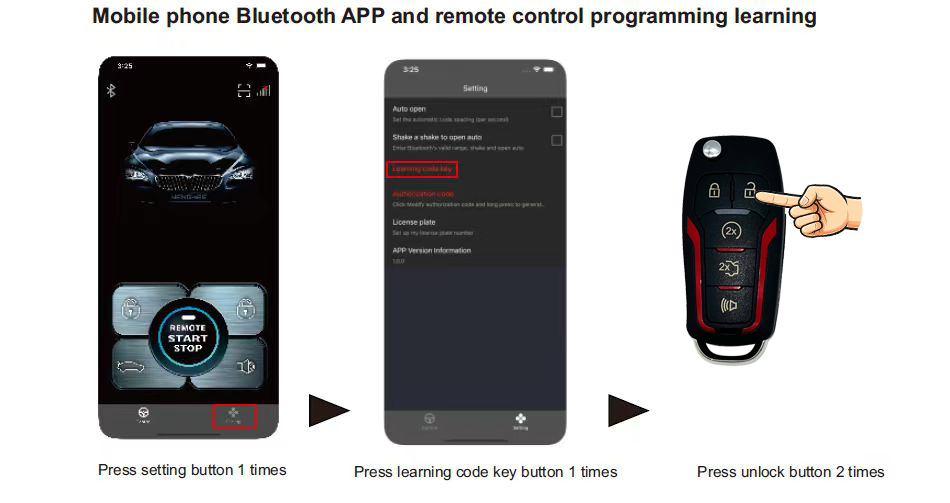
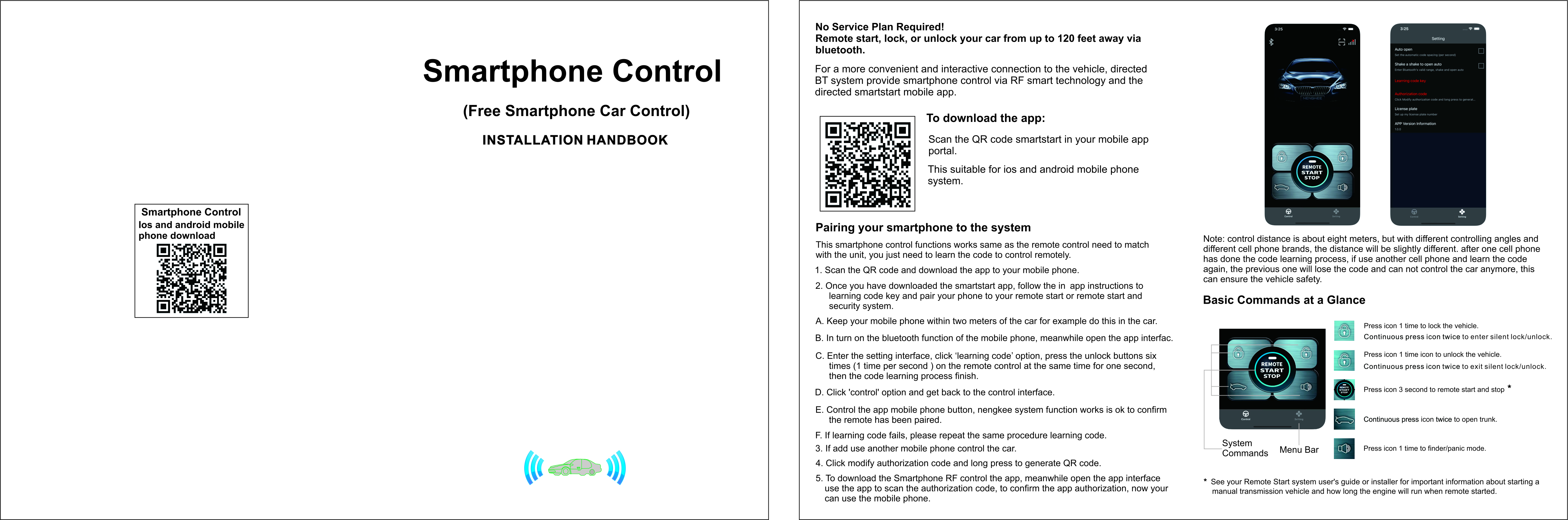
Before pairing the app supplied with your system, please make sure:
⚠ The smartphone module uses Bluetooth, not a cellular network. Your phone must be near the vehicle during pairing and operation. Pairing steps and remote-control illustrations may vary by kit. Actual operating range varies by phone, antenna placement and interference.
📹 Video 1: Smartphone App Pairing Tutorial
Learn how to pair your smartphone with the EFHIPS Bluetooth control module.
📹 Video 2: Troubleshooting App Connection Issues
If the app cannot connect or remote start is not working, watch this troubleshooting guide.
About this guide: These shared-function answers are based on technical information confirmed by the EFHIPS team. They apply to EFHIPS aftermarket push-button start / PKE / remote-start / alarm systems with the same operating functions. Remote styles, button designs and supplied accessories may differ between kits. Refer to the instructions supplied with your specific kit for wiring, pairing and accessory details. Vehicle compatibility and safe installation must be verified individually.
Search installation, remote start, PKE, security and compatibility topics.
Yes. For the described installation on vehicles with a mechanical steering lock, a suitable original key or correctly cut key blade must remain in the factory ignition cylinder. It keeps the factory steering lock released; removing it may lock the steering wheel. The fitted key or blade and the vehicle-specific procedure must be verified before driving.
The EFHIPS installation guidance describes inserting a matching key or cut key blade and turning it to the steering-lock release position, typically ACC. For this installation configuration, the original ignition-switch electrical connector is disconnected as part of the wiring work to avoid unintended accessory power draw and interference with remote-start operation. Only a qualified installer should identify and handle the correct OEM connector. Confirm that steering remains fully unlocked and that all vehicle safety functions work before use.
The technician recommends retaining the factory lock cylinder rather than removing it. Removal can be complex and may affect original safety or anti-theft functions. Have a qualified installer verify the safe method for the specific vehicle.
No, not in the EFHIPS configuration described here. Removing the retained key or blade may allow the mechanical steering lock to engage, even if the electronic start system is functioning. Do not operate the vehicle with an unverified steering-lock arrangement.
Yes. Some vehicles detect a key remaining in the ignition and may require vehicle-specific handling of the key-in detection circuit to avoid fault codes. A transponder-chip immobilizer may also require additional integration. Retaining a key inside a vehicle can affect theft protection, so the factory system must be assessed by a qualified installer; EFHIPS alarm features are not a substitute for OEM immobilizer compatibility.
A vehicle without a chip-key immobilizer may avoid transponder-related work, but it must still meet the electrical, steering-lock, door-lock and starting-system requirements. Mechanical-key ignition alone does not guarantee compatibility.
Carry an authorized remote, unlock the vehicle, press the foot brake and press the START button once. If the crank time is too short, the EFHIPS technician guidance describes holding the START button until the engine starts and then releasing it. Confirm the normal starting sequence during controlled installation tests.
Without pressing the foot brake, successive button presses follow the accessory sequence ACC → ON → OFF. The exact indication or button appearance can vary with the supplied kit.
The technician reports that the brake pedal must be pressed for a normal stop-button shutdown. Stop the vehicle completely, select the correct parking/neutral position as required by the vehicle, and apply the parking brake before switching off. Do not attempt this procedure while driving.
The system is designed to require a foot-brake signal for normal engine start and stop operation. That brake-dependent behavior does not establish a comprehensive in-motion shutdown safety system. Never intentionally test engine shutdown while moving; the installer must verify the correct response under the applicable stationary safety checks.
The running engine does not automatically shut off when the remote moves away. Once the engine is stopped, an authorized remote may be required to disarm the security system before restarting. This should be checked on the installed vehicle.
The system does not include a dedicated, universal emergency-start bypass for control-module failure. Whether the original key-start functionality can be retained depends on the vehicle and professional installation design. The supplied manual describes an emergency security-disarm procedure that may allow starting when a remote fails, but it does not resolve every hardware or wiring fault. Review the procedure before an emergency occurs.
Carry the authorized EFHIPS remote and unlock the vehicle using the remote before opening a door. The technician reports that forced entry while the system is armed triggers the alarm and engine shutdown. Verify the vehicle-specific take-over sequence before attempting to drive.
After a successful remote start, the system runs the engine for approximately 15 minutes when there is no authorized takeover. It then shuts off and remains in its locked/security-armed state. Observe the vehicle safely during initial system testing.
Remote starting requires the vehicle to be locked and in security-armed mode. The technical instructions describe alarm activation and engine shutdown upon unauthorized entry and certain security-triggering inputs. Unlock the vehicle with the authorized remote before entry. Do not attempt to select a gear or move a vehicle as a test of the security system.
EFHIPS technical guidance describes a parking-brake input for remote-start conditions; it does not describe an independent transmission-position sensor in the module. A vehicle being parked does not prove that it is out of gear. Before enabling remote start, the installer must validate the vehicle's OEM start-inhibit interlocks and ensure that the vehicle cannot crank or move when in gear.
The EFHIPS technical team lists both manual- and automatic-transmission vehicles as installation possibilities and specifically requires a correctly connected parking-brake input for manual-transmission installations. A parking-brake signal alone does not verify Neutral or prevent in-gear remote cranking. Do not enable remote start on a manual-transmission vehicle unless a competent installer has implemented and verified a suitable fail-safe neutral-safety solution.
The technician identifies a fuel-pump detection signal as the engine-running feedback used for remote start. If remote start repeatedly attempts to crank, the installer should confirm the correct sensing source and wiring using the relevant vehicle service information.
EFHIPS technical guidance confirms that automatic proximity unlock and lock are enabled or disabled together, not individually. Check the current remote/manual procedure before changing the setting.
EFHIPS technical guidance confirms there is no direct user-adjustable PKE detection range setting. Antenna placement and orientation may change practical detection, and nearby electronics such as dash cameras may introduce interference. Do not promise a fixed distance.
The technician describes unlocking the door with a mechanical door key, followed by the emergency security-disarm procedure in the product manual. This procedure and restart authorization must be verified in advance. It does not replace the need for a functional remote or a planned recovery method.
The technician lists unauthorized door entry, vibration/impact, attempted unauthorized starting, and certain brake inputs while armed. Which events operate correctly depends on installation, sensors and wiring. The EFHIPS alarm does not guarantee that the original factory immobilizer remains unchanged.
EFHIPS technical guidance identifies double-pulse and pneumatic central-locking systems as unsupported. Some systems that enter a sleep mode and accept only their original remote after parking may also be incompatible. Check the factory locking circuitry and triggering method before installation.
The product family uses a conventional 12 V automotive electrical system and is intended for compatible mechanical-key internal-combustion vehicle installations. Pure electric vehicles are not supported. Diesel systems require individual verification, especially older vehicles; the confirmed answers do not establish hybrid-vehicle compatibility. Do not assume suitability based on fuel type alone.
The technician specifies a 12 V vehicle electrical system. 24 V vehicles are not supported. Vehicle battery voltage alone does not establish full compatibility.
If the system is wired correctly and other functions work but the engine does not start, the factory key/transponder authorization should be checked. A compatible, vehicle-specific immobilizer interface or bypass module may be required. Different factory systems use different technologies; a basic RFID chip-key bypass is not a universal solution for PATS, Passlock or smart-key vehicles.
The technician notes that certain sleep-mode central-locking systems stop accepting aftermarket lock/unlock trigger signals after the vehicle has been parked. Such systems may be unsuitable without a validated compatible interface. Always evaluate the factory lock controller and ignition circuits before promising fitment.
The EFHIPS system does not connect through or occupy the vehicle's OBD diagnostic port. The technical team expects original remote, door lock, trunk and alarm functions to remain available when integrated correctly. Because OEM circuits differ, the installer should test these functions after installation rather than assume universal compatibility.
EFHIPS technical guidance gives a typical unobstructed line-of-sight range of approximately 30–80 m (98–262 ft) for the RF remote and 10–25 m (33–82 ft) for the Bluetooth app. Actual range depends on vehicle shielding, interference, antenna positioning and the phone. Bluetooth is local operation, not mobile-network or internet remote control.
EFHIPS installation experience indicates that many Japanese, Korean and US vehicles are relatively straightforward for experienced installers, while some European vehicles involve more complex electrical integration. This is not a tested make/model fitment list. Compatibility must be checked by year, make, model, original ignition type, immobilizer, door-lock circuitry and transmission.
First confirm that the required brake-input signal is reaching the EFHIPS module. Brake-switch polarity and timing vary by vehicle. A trained installer should measure the signal and confirm the wiring against the validated diagram before changing connections.
Check factory immobilizer authorization, the engine-management and ignition circuits, and whether the correct start feedback is present. A transponder-related issue is one possibility, not a universal diagnosis. Do not repeatedly crank a vehicle with an unresolved fault.
Verify the start output, vehicle starter circuit, brake detection and factory start interlocks. Some vehicles have more than one relevant circuit; do not join factory starter or ignition wires together without a verified vehicle-specific schematic and load analysis.
A valid foot-brake input distinguishes a requested engine start/stop from accessory-mode button presses. If the expected brake signal is missing or has a different polarity, the push-button start system may only cycle through ACC/ON/OFF. Have the installer verify the vehicle-specific brake circuit.
Some vehicles energize the brake-switch circuit only in certain ignition states. Do not simply connect the brake circuit to an always-live 12 V feed. Changing OEM wiring can affect brake lamps, transmission interlocks and safety systems. Obtain a validated vehicle-specific solution from a qualified automotive electrician.
Confirm the remote-start prerequisites, including security-armed/locked status, parking-brake input where required, and engine-running feedback. The original EFHIPS support instructions associate three horn beeps with a parking-brake detection issue; consult the instructions supplied with your kit to confirm its exact warning patterns.
A preliminary bench test can check for basic power and control responses using a suitably fused 12 V test setup. Hearing internal relays click only indicates some activity; it does not prove correct wiring, safe starter outputs or vehicle compatibility. A professional in-vehicle functional and safety inspection is still necessary.
The blue status LED is used to indicate security and alarm states rather than simply acting as a constant power indicator. Flash patterns and indicator accessories can differ by kit configuration; consult the supplied operating instructions for your particular unit.
Send your year, make, model, transmission, original ignition type and immobilizer information to support@efhips.com. We will help you identify the information an installer needs to verify compatibility.
Vehicle brand names are used for compatibility and identification purposes only. EFHIPS is not affiliated with, endorsed by, or sponsored by the vehicle manufacturers listed above.
Still have questions? Contact us at support@efhips.com with your vehicle details.