A push button can make an ignition area look cleaner and change the way a driver operates the vehicle. But not every push-to-start product is a complete keyless starting system. Some are standalone switches designed to control a suitable 12-volt circuit as part of a correctly planned installation.
What a 12V push button switch is
A 12V push button ignition switch is a physical control component used in a vehicle or other application with a compatible 12-volt electrical system. Instead of turning a conventional key at the control point, the driver presses a button connected to the appropriate ignition and starter circuits.
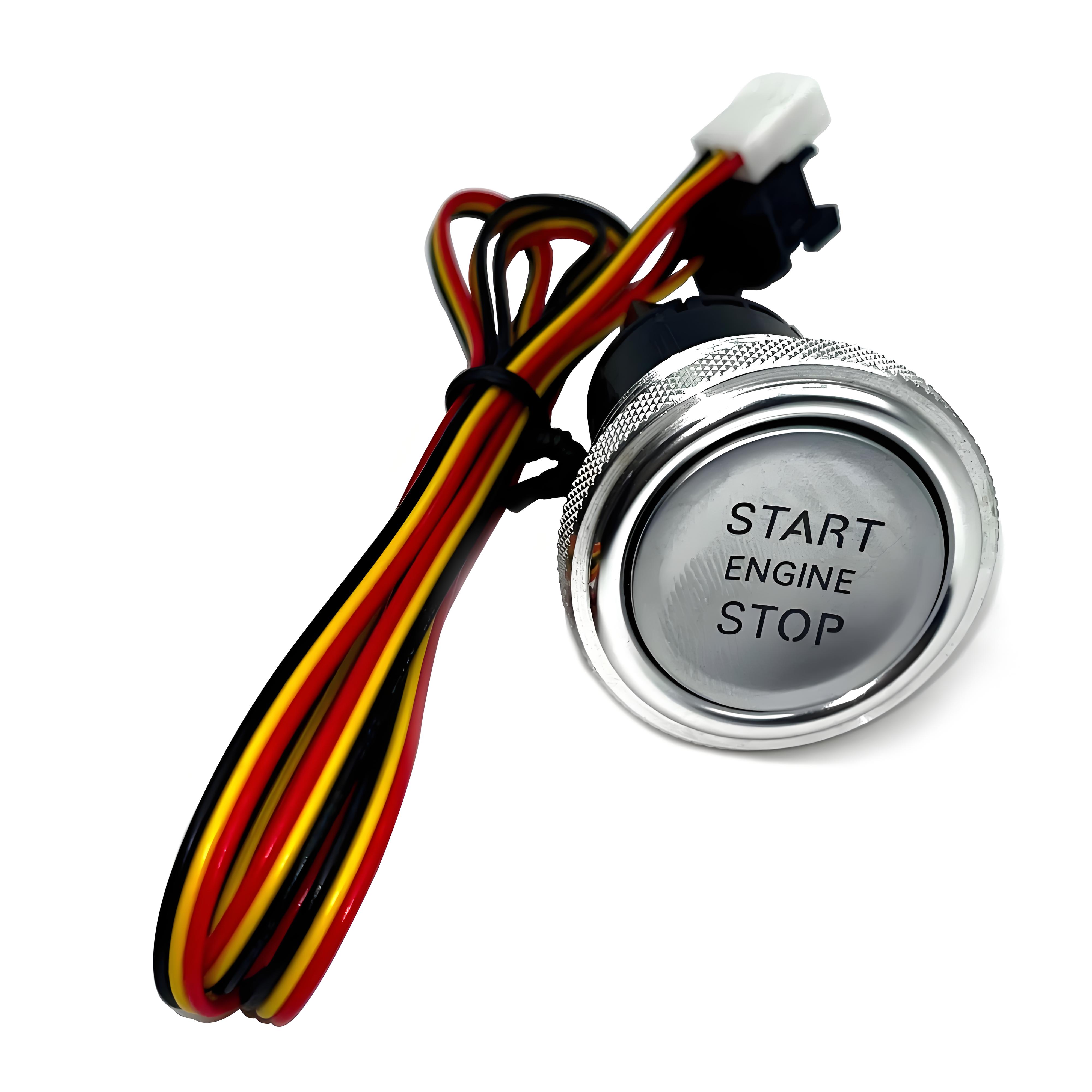
The EFHIPS switch is a chrome-finish button with the words “START ENGINE STOP” on its face and a pre-attached, color-coded wiring harness. It is intended as a replacement or custom-install control for compatible 12V cars, trucks, boats and similar applications.
What it does — and what it does not do
When connected to a suitable circuit and configured correctly, the button can provide a push-to-start and stop control. The actual behavior depends on the vehicle's electrical design and the way the installer wires and verifies the circuit.
- It is a physical start/stop control: it replaces or adds a button at the chosen control location.
- It includes a pre-attached harness: the supplied wiring helps organize the connection work.
- It is designed for compatible 12V applications: the vehicle or equipment must have a suitable electrical system and circuit arrangement.
This standalone switch is not a complete aftermarket push-button start kit. It does not include a PKE proximity module, remote start function or immobilizer bypass. It does not automatically convert a factory keyed vehicle into a factory-style smart-key system.
Why the wiring plan matters
The button itself is only one part of the installation. The installer must identify the correct circuits, understand how the vehicle's ignition and starter controls operate, and confirm that the switch is suitable for the intended electrical load and control method.
Do not rely on wire color alone. Vehicle wiring colors and aftermarket harness colors are not universal standards. Use the product's wiring information, the vehicle's service information and a multimeter to identify and verify each connection.
Who may find this type of switch useful?
It may suit an owner or installer who wants a chrome push-button control for a compatible 12V custom project, a replacement control or a carefully planned vehicle or marine installation. It is not a shortcut around vehicle-specific electrical checks.
Confirm system voltage, the intended circuit, mounting space, wiring requirements and whether the vehicle's existing security system requires additional components. If any of these points are unclear, ask an experienced automotive electrician to review the plan.
Questions to answer before installation
- Is the application a compatible 12V system?
- Is this a standalone switch replacement, or do you actually need a complete keyless-start system?
- Have the ignition and starter circuits been positively identified?
- Is there a safe, secure location for the button and harness?
Final thoughts
A 12V push button ignition switch can be a simple-looking upgrade, but the quality of the result depends on correct circuit identification and installation. Choose the right type of product for the job, and do not confuse a standalone switch with a full smart-key or remote-start system.
Related Reading
- How to Plan a Push Button Start Installation Before You Touch a Single Wire
- Push Button Start Installation: What the Wires Actually Do
- Push Button Start Kit Buyer’s Guide
Explore the EFHIPS 12V Push Button Switch
Review the product details and contact EFHIPS to discuss your application before ordering.
View Product Details