What this guide covers
1. What to Verify Before Installing Push Button Start on a 2008 Honda Accord
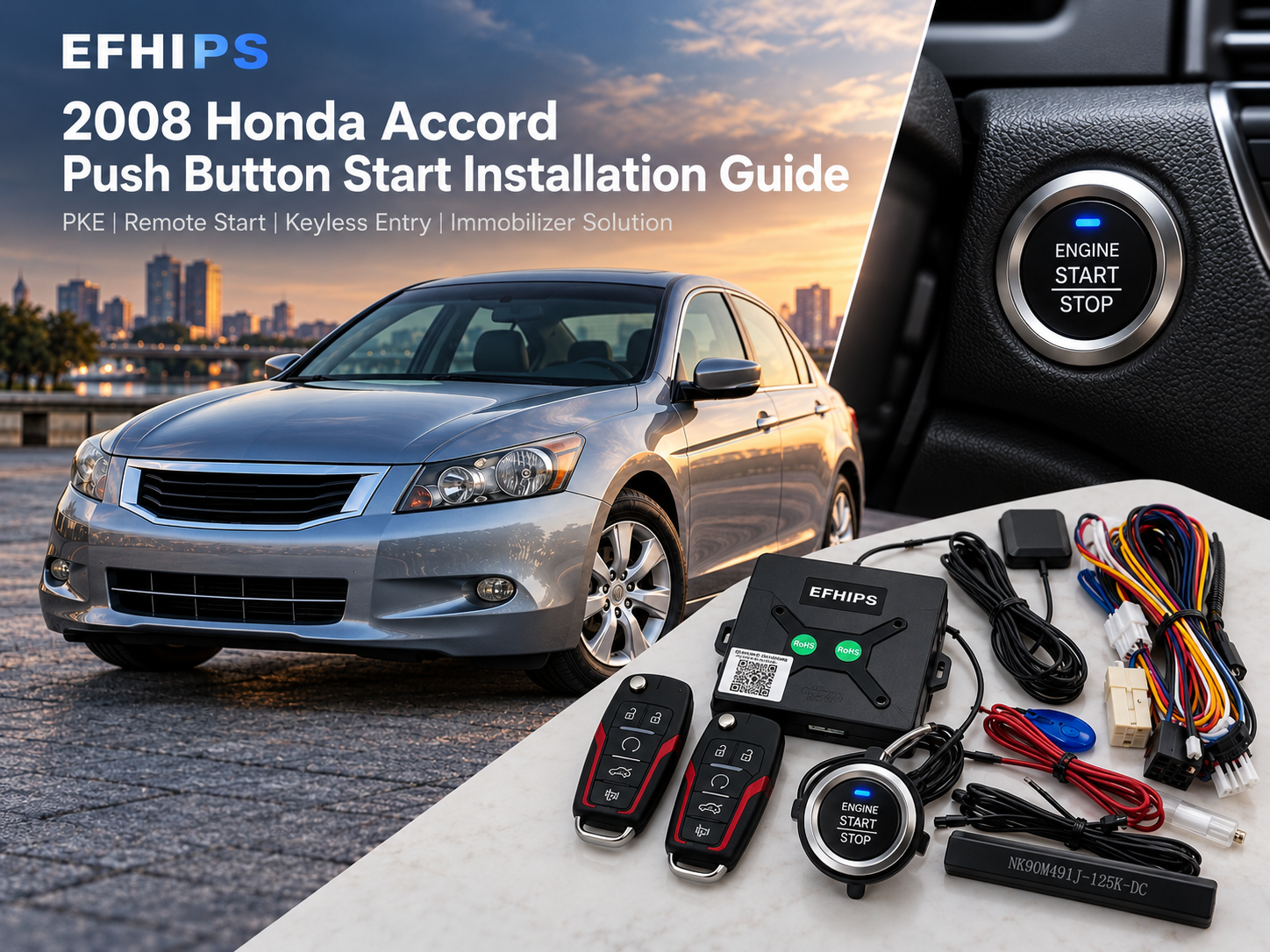
The 2008 Honda Accord belongs to the eighth-generation Accord platform, and many examples are still used as daily drivers. That makes the model a common candidate for upgrades such as aftermarket keyless entry, remote start and push button start.
The first mistake to avoid is treating a 2008 Honda Accord push button start installation as a simple “replace the key with a button” project. The factory ignition switch is part of a larger system that includes battery power, accessory power, one or more ignition feeds, the starter circuit and the Honda immobilizer system.
Vehicle-side items to confirm
- Keyed ignition, not factory push-button start
- Automatic or manual transmission
- Factory immobilizer/transponder key system
- Brake-switch signal behavior
- Door-lock logic
- Starter and ignition circuit behavior during crank
Tools worth having
- Digital multimeter
- Vehicle-specific wiring information
- Proper crimping/soldering tools
- Fuse protection
- Trim-removal tools
- OBD2 scanner for troubleshooting
2. Identify the Accord Ignition Circuits by Function, Not Color Alone
The most important part of a Honda Accord push start install is correctly identifying what the original ignition switch is doing in each key position. A wiring diagram can help narrow the search, but a digital multimeter should confirm the actual circuit behavior on the vehicle in front of you.
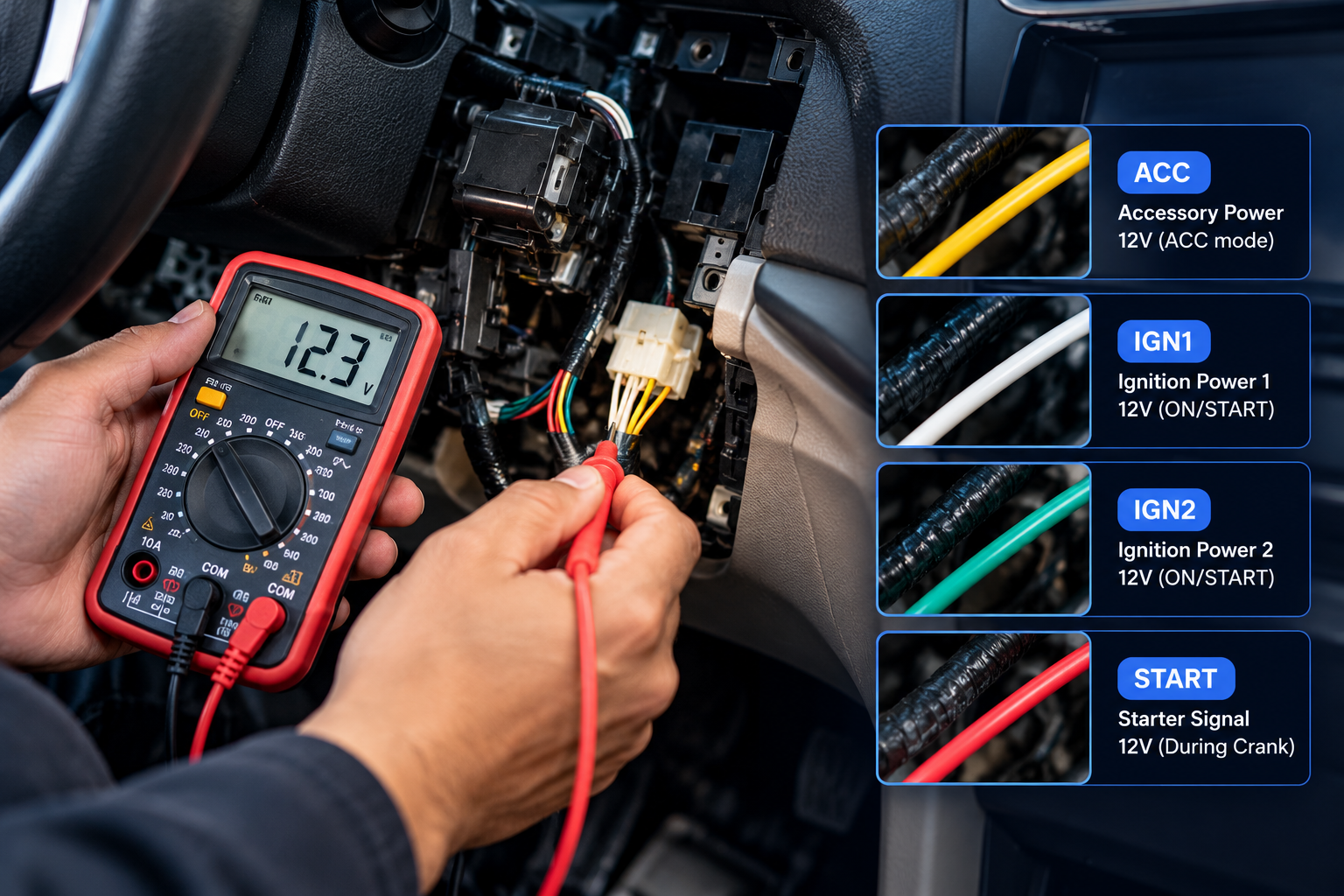
| Circuit | What to verify | Why it matters |
|---|---|---|
| Constant 12V | Battery voltage is present at all times. | Supplies the aftermarket control module and switching circuits. |
| ACC | Power appears in the accessory position and behaves as expected during crank. | Powers non-engine accessories such as audio or selected vehicle electronics. |
| IGN | Required ignition power remains available in ON and, where required, during START. | Loss of a required ignition feed can cause a crank-no-start or immediate stall. |
| START | 12V appears only during the crank request. | Controls the starter circuit without keeping the starter engaged after the engine starts. |
One of the best diagnostic habits is to test ignition circuits while the starter is actually cranking. A wire that shows 12V in ON but drops out in START may not be the circuit you assumed it was—or the installation may not be maintaining a feed that the vehicle needs to run.
3. The Factory Immobilizer Is the Part You Cannot Ignore
A 2008 Honda Accord commonly uses a factory transponder-based immobilizer. The engine-management system expects valid key authorization before allowing the engine to continue running. That means the starter can crank perfectly while the engine still refuses to start if the immobilizer requirement has not been satisfied.
For a push-button or remote-start conversion, an appropriate immobilizer interface or bypass solution may be required. The exact method depends on the vehicle and the bypass product being used. Follow the bypass manufacturer's programming procedure rather than trying to imitate or permanently defeat the factory security system.
Typical immobilizer-related symptoms
- The engine cranks normally but will not fire.
- The engine starts briefly and then stalls.
- A security/immobilizer indicator remains active or flashes abnormally.
- The original key starts the vehicle, but the remote-start sequence does not.
4. Verify the Brake Input and Start Authorization Signal
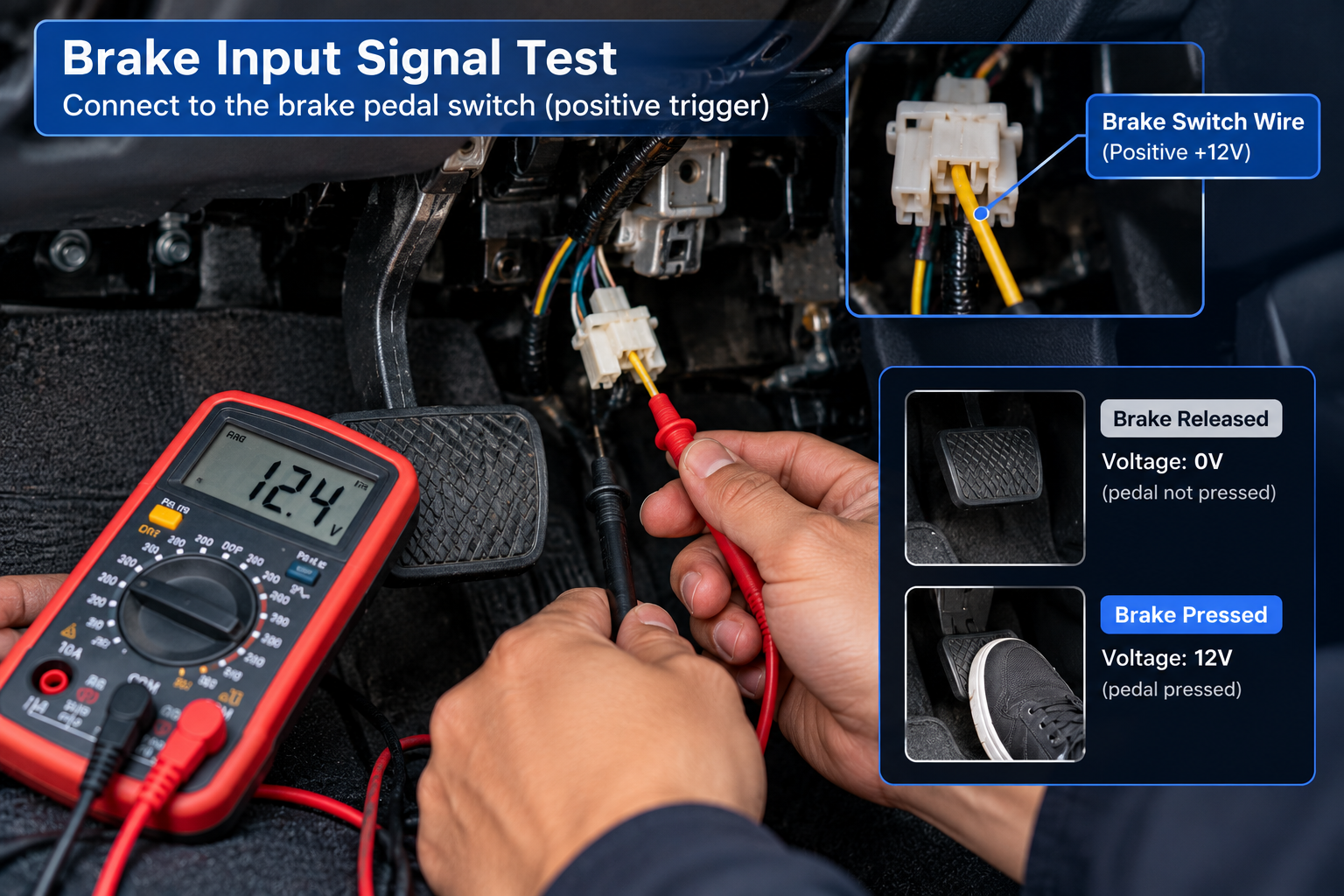
The brake signal is an important input for many aftermarket push button start systems. It tells the control module when the driver is intentionally requesting an engine-start sequence and can also be part of the logic used to transition between ACC, ON and START.
Confirm the brake-switch wire by measuring it with the pedal released and pressed. Do not assume the polarity. If the Accord's vehicle-side signal does not match what the aftermarket system expects, an interface relay may be needed.
5. Power and Ground Quality Matter More Than They Look
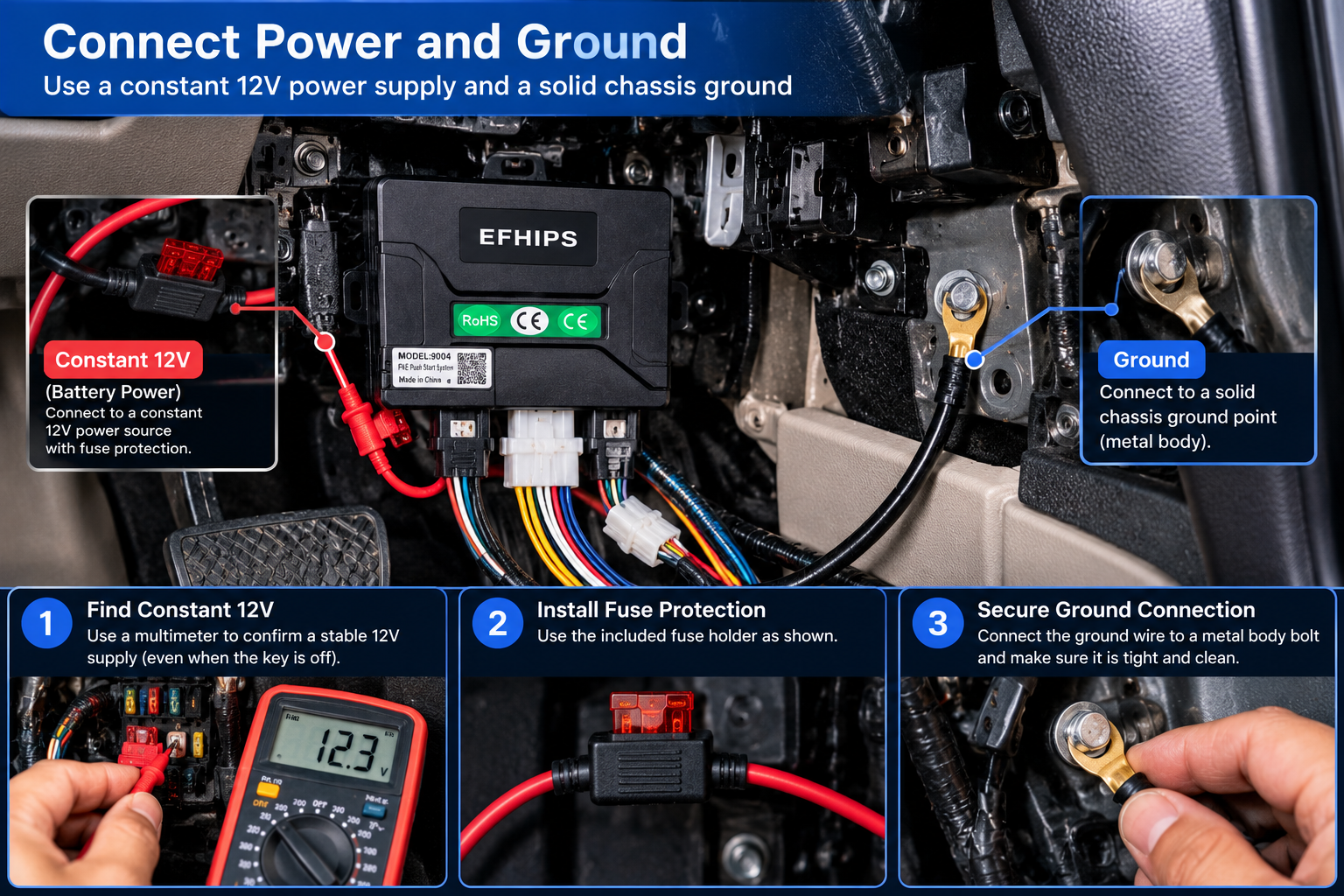
A weak ground can create strange symptoms: random reboots, inconsistent PKE behavior, relays clicking without a complete start sequence, or a module that appears to work until the starter draws current.
Use a clean chassis ground point on bare metal and secure it mechanically. Then check voltage at the control module during cranking. A connection can show normal battery voltage with no load and still suffer excessive voltage drop once the starter is engaged.
Inspect these areas carefully
- Constant-power feed and fuse protection
- Ground ring terminal and chassis contact
- Crimped or soldered splices
- Relay sockets and connectors
- Harness pins that may have backed out of a plug
6. Choose the Push Button Location Before Final Wiring
Button placement is partly cosmetic and partly practical. The eighth-generation Accord dashboard has curved surfaces, so a poorly chosen location can make an otherwise clean installation look obviously aftermarket.
Choose a flat, reachable location that does not interfere with the steering column, knee airbags, existing switches, HVAC controls or trim fasteners. Check the space behind the panel before drilling because the visible surface may have wiring or structural plastic directly behind it.
7. If Push Button Start Works but Remote Start Does Not
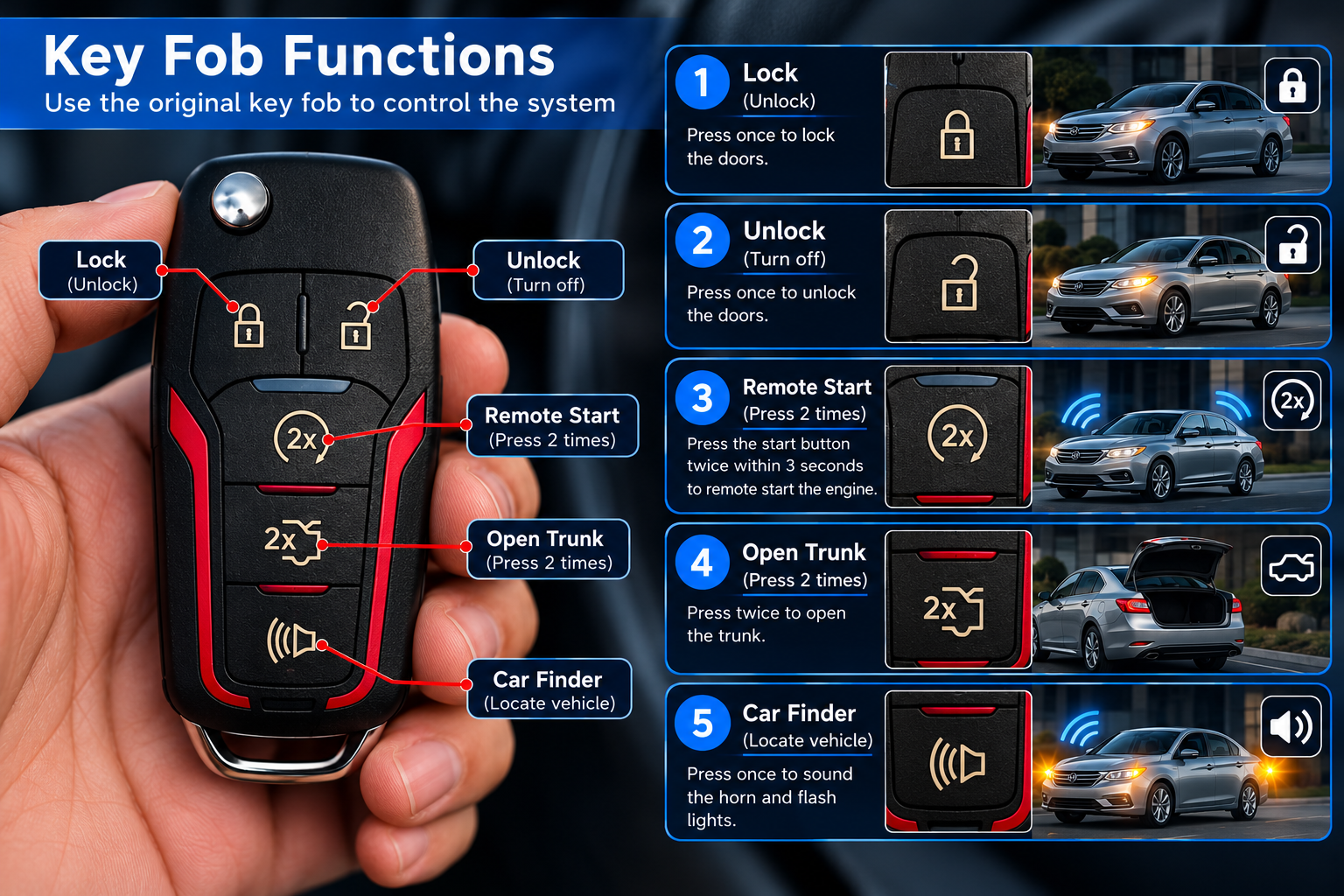
When the cabin push button starts the Accord correctly but remote start fails, the fault is often in a part of the sequence that is unique to unattended starting rather than the main starter circuit.
Check:
- Immobilizer bypass activation during remote start
- Brake and safety inputs
- Engine-running detection
- Ignition outputs remaining active for the full crank/run sequence
- Parking/neutral safety requirements
- Vehicle battery voltage
If both push-button start and remote start produce the same crank-no-start symptom, move immobilizer authorization, required ignition feeds, power/ground quality and vehicle-side engine-management faults higher on the list.
8. Common Problems After a 2008 Honda Accord Push Start Conversion
| Symptom | First checks |
|---|---|
| Starter does not crank | Brake/start authorization, starter output, neutral-safety logic, constant power and ground. |
| Cranks but will not start | Immobilizer authorization, required ignition feed during crank, fuel/engine-management faults. |
| Starts and immediately stalls | Immobilizer recognition and ignition power after the starter is released. |
| Works with button but not remote start | Bypass activation, safety inputs, engine-running detection and remote-start timing. |
| Module resets during crank | Voltage drop, weak ground, undersized power feed or poor connection. |
9. Final Testing Checklist Before Reassembling the Dash
Do not close the steering-column covers as soon as the engine starts once. Test the system repeatedly before reassembly.
- Start the vehicle from the push button several times.
- Confirm ACC and ON functions behave normally.
- Confirm the starter disengages immediately after the engine starts.
- Verify the brake input works consistently.
- Test lock/unlock and PKE behavior.
- Test remote start from a safe outdoor location.
- Confirm the engine shuts down correctly from remote-start mode.
- Check for warning lights or stored diagnostic trouble codes.
- Inspect every connection before reinstalling trim.
Frequently Asked Questions
Can a 2008 Honda Accord be converted to push button start?
A compatible keyed-ignition Accord can potentially be converted with an aftermarket push button start system, but the job requires correct integration with the ignition circuits, immobilizer, brake input and vehicle safety logic.
Does a 2008 Honda Accord need an immobilizer bypass?
Many vehicles from this generation use a factory transponder immobilizer. A compatible bypass or immobilizer interface may therefore be required for remote-start or keyless-start operation. Verify the exact vehicle and bypass requirements before installation.
What wires are used for push button start on a 2008 Honda Accord?
The installation generally interfaces with constant power, accessory, ignition, starter and brake/start-authorization circuits, but wire colors and exact pin locations should be verified on the specific vehicle rather than copied from a generic chart.
Why does the Accord crank but not start after installation?
The most useful first checks are factory immobilizer authorization and required ignition power during the actual crank event. After that, verify power, ground and vehicle-side engine-management conditions.
EFHIPS 9007 Push Button Start System
Review the complete PKE, push button start and remote start system before planning an installation.
View Product Details →Installation disclaimer: professional installation is recommended. Vehicle wiring and factory security systems vary by year, trim, engine and market. Always verify circuits with a digital multimeter and correct vehicle-specific service information before making connections. Never remote-start a vehicle in an enclosed area.